


For Japanese language education for training and employment
Human Academy
With 39 years of experience in Japanese language education, we are a leading Japanese language school committed to providing comprehensive job placement programs.
From initial support upon arrival in Japan to Japanese language education after placement, and even passing the N4 level of the Japanese Language Proficiency Test, you can rely on us.

Three reasons why Human Academy is chosen for Japanese language education for job training and employment.
-
Reason 01
39 years of experience in Japanese language education
Safety, Trust, and Integrity39 years of experience in Japanese language education. We maximize the application of our expertise from one of the largest Japanese language schools to employment opportunities.
We have extensive experience providing Japanese language training to over 300 companies. *We are currently preparing to apply for work-related certification. -
Reason 02
Learn while working
We offer both flexible and fixed-time systems.Over 550 registered Japanese language teachers!
We offer flexible scheduling options, including a free-time system that allows you to learn while working, and a fixed schedule, making it easy for shift workers to take part in the course. *Scheduled for April 2027 -
Reason 03
In addition to making the course mandatory,
Standardizing the curriculum with a view to passing the certification exam.We have adopted the curriculum of Human Academy, which has a method for preparing for the JLPT/JFT exams, as our standard approach.
We provide education that goes beyond simply "fulfilling obligations," looking beyond the immediate future. *Under development
- When should I start preparing?
- Who should I talk to about this?
- What should I prepare? etc.
We have received many inquiries.
Please feel free to contact us for a consultation.
Reason 1
39 years of experience in Japanese language education.
As one of the largest Japanese language schools
We are serious about the job training process.
Safety, Trust, and Integrity
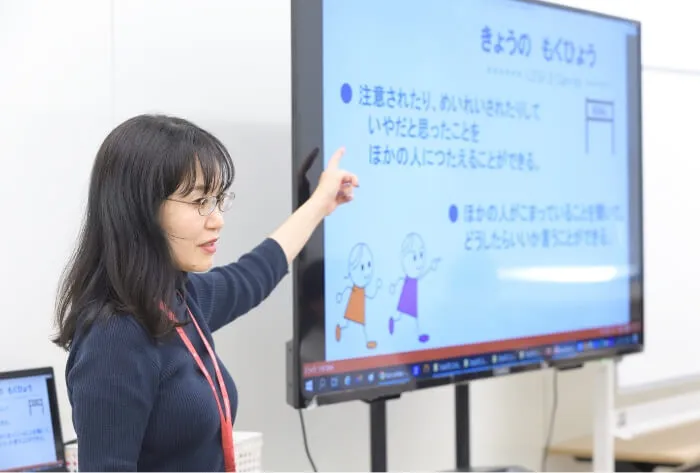
It's not just about teaching and being done with it; it's about developing talent that not only helps people pass the N4 exam but also enhances corporate value.
The "mandatory education" requirement comes after passing the N4 level of the proficiency test within three years. The new training and employment system separates "mandatory education" from "passing the exam." If education is provided but the exam is not passed, although there may be a grace period, continued employment will be difficult.
For the companies we support, the loss of valuable talent that they have invested in is a major problem.
We also offer solutions for passing the N4 exam and the Level 2 exam. *We are currently preparing to apply for the work experience certification.
Human Academy
Introduction to Japanese Language Schools
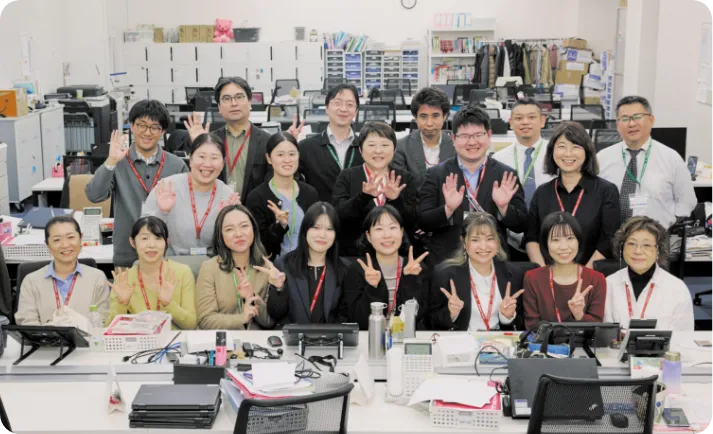
For 39 years, we have trained and sent out 30,000 foreign graduates into society, making us one of Japan's largest Japanese language schools.
We have built up a track record as a Japanese language education institution, not only in "teaching" but also in "curriculum development, teaching methods, and instructor training," including the development of the "Tsunagu Nihongo" textbook, the creation of employment curricula and training, and the creation of curricula and training for government agencies.
We provide comprehensive support, from curriculum development for vocational training to teaching methods and actual educational delivery.
Reason 2
Leveraging the advantages of having over 550 Japanese language teachers,
Multiple learning times and days are available.
Learn while working
Free time system and
A fixed system is implemented.

We maximize the days and times available for learners who are studying while working.
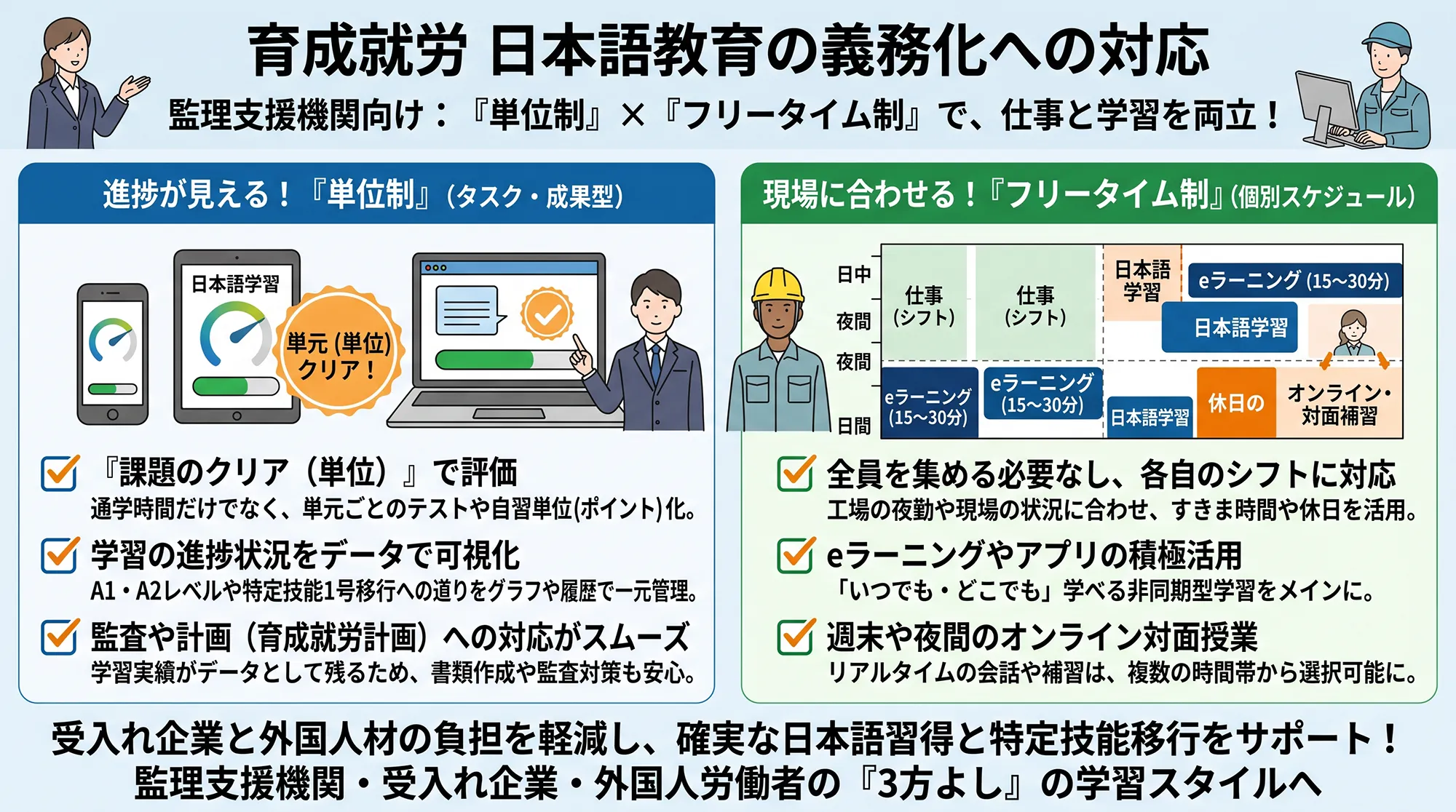
We can offer flexible scheduling, fixed schedules, or a hybrid approach to suit your needs. Whether you have an irregular work schedule, want to focus on learning on weekends, or aim to complete your studies in 3 months, 6 months, or 1 year, we offer a learning option that fits a variety of situations.
The training immediately following arrival in Japan is planned to be a short-term, fixed-schedule program. *This is still under development and may be subject to change.
Image of a flexible work schedule (under development)
Reason 3
Leave your JLPT/JFT-Basic preparation to us!
In addition to making the course mandatory,
With the goal of passing the qualification exam
Standardize the curriculum

The training employment program requires passing the JLPT N4 or JFT-Basic A2. Without this, you cannot transition to Specified Skilled Worker No. 1.
You need to pass the exam during the 3-year period plus a 1-year extension.
Human Academy's curriculum, which boasts extensive know-how for exam preparation and success, is included as standard, providing a curriculum that allows you to pass without needing additional qualification preparation training. In addition, the autonomous learning app (HAi-J) significantly increases the pass rate.
You can entrust it to us with confidence.
*This product is still under development and may be subject to change.
- When should I start preparing?
- Who should I talk to about this?
- What should I prepare? etc.
We have received many inquiries.
Please feel free to contact us for a consultation.
Specializing in "Mandatory Japanese Language Education"
Six anticipated Q&A questions
-
Regarding the requirement under the training and employment program to "secure time for Japanese language learning during working hours," what kind of curriculum can be adapted to meet this requirement?To make it easier for participating companies to incorporate learning time into their workdays, we offer short-time, high-frequency programs lasting one hour per session, as well as flexible scheduling to fit shifts (early morning, immediately after lunch break, just before the end of the workday, etc.). We also plan to issue a "Certificate of Completion of Learning Time" that can be officially verified like a time card, showing learning history during work hours (login time, number of sessions attended), and this can be used directly for audits and administrative reporting.
-
How should we clarify the burden of costs related to Japanese language education (the scope of mandatory corporate burden) and how to handle textbook fees and examination fees?In accordance with the operational guidelines for the training and employment program, we will issue clear itemized invoices for basic course fees and required materials, which are considered "training expenses to be borne by the receiving company (or management support organization)." We will also present a plan that clearly separates the accounting for the individual's self-improvement activities (such as optional JLPT exam fees and additional materials), thereby providing systemic support to prevent unfair burdens on the individual (such as disputes over salary deductions).
-
If a student fails to reach their target Japanese language level (e.g., N4), would this constitute a "breach of educational obligation" on the part of the company or management support organization? Furthermore, are there any remedial measures in such a case?If you can prove that you have sincerely provided learning opportunities (through attendance rates and assignment submission rates), you will not usually be immediately accused of breaching your obligations as a company. Our school meticulously records and stores "proof of fulfillment of the learning process (attendance rate of 80% or higher, assignment submission, etc.)." Furthermore, in the unlikely event that you fail the N4 or equivalent exam, we offer a package of "retake exams and intensive supplementary lessons for unsuccessful candidates" at a reduced additional cost, so that you can retake and pass within the grace period stipulated by the system.
-
Regarding the Japanese language proficiency of trainee workers, can you assist in preparing the mandatory documents that need to be submitted and reported to the government (such as the local immigration bureau) as a management support organization?Yes, we can provide support. Documents such as the "Japanese Language Learning Implementation Status Report" and "Attendance and Achievement Evaluation Sheet," required for periodic audits and reports, can be output with a single click from our school's Learning Management System (LMS) in a format compliant with official regulations. This is intended to significantly reduce the reporting workload for management support organizations.
-
Is it possible to complete the entire process from passing the N5 level of the "local education" course in the sending organization (home country) to obtaining the second-degree visa upon arrival in Japan in one go?Yes, it is possible. Our school offers e-learning for JFT/JLPT exam preparation, allowing you to prepare for the exam while you are there. Similarly, after you arrive in Japan, we also offer e-learning for N4 exam preparation, as well as for the Level 1 and Level 2 exams. We also offer preparation courses for the national examination for certified care workers.
-
Regarding training costs, do you provide support for applying for subsidies that receiving companies can utilize (such as the Human Resources Development Support Subsidy), or do you offer eligible curricula?Yes, our employment programs can be designed to meet the requirements of the Ministry of Health, Labour and Welfare's "Human Resource Development Support Subsidy (Business Development Reskilling Support Course, etc.)." Furthermore, by utilizing various subsidies, we can significantly reduce the financial burden on receiving companies. We will not only issue the curriculum schedule and certificate of completion required for the application, but also gather and propose information from local governments.
*This information is subject to change. We will update it as needed.
As an "excellent training and employment provider"
Solutions for obtaining certification
To be certified as an "excellent training and employment provider (receiving organization)" under the training and employment system, it is necessary to meet the criteria for each evaluation item (out of 100 points) and to achieve "a total score of 70% or higher (70 points)" and "a score of 60% or higher in each evaluation item (I to III)".
1. Main evaluation criteria (breakdown of points)
- I. Achievements in acquiring skills and Japanese language proficiency (50 points)
Pass rate for skills tests (basic level, level 3, etc.)
Pass rates and learning support achievements for the Japanese Language Proficiency Test (equivalent to A1/A2/B1, etc.)
Cooperation in conducting skills tests - II. System, Treatment, and Implementation Status (40 points)
Establishment of an appropriate consultation and support system
Formulation and implementation of policies regarding wages and other working conditions, as well as human rights policies.
Cooperation in accepting individuals who have difficulty being accepted from other institutions, etc. - III. Coexistence with the local community (10 points)
Providing opportunities to participate in local events and learn about Japanese culture.
Status of resident tax payments and compliance with the use of My Number health insurance cards, etc. - IV. Status of legal violations and problems (items that result in deductions)
Points will be deducted for violations of laws such as the Labor Standards Act and the Immigration Control Act, or for cases involving missing persons.
To score points Human Academy
Solution
-
AI conversation app to improve your conversational skills
Pass rates and learning support achievements for the Japanese Language Proficiency Test (equivalent to A1/A2/B1, etc.)
It excels at improving conversational skills!
This learning app dramatically increases opportunities to listen to and speak Japanese.
Solutions to overcome the inability to speak -
e-learning for exam preparation such as the JLPT
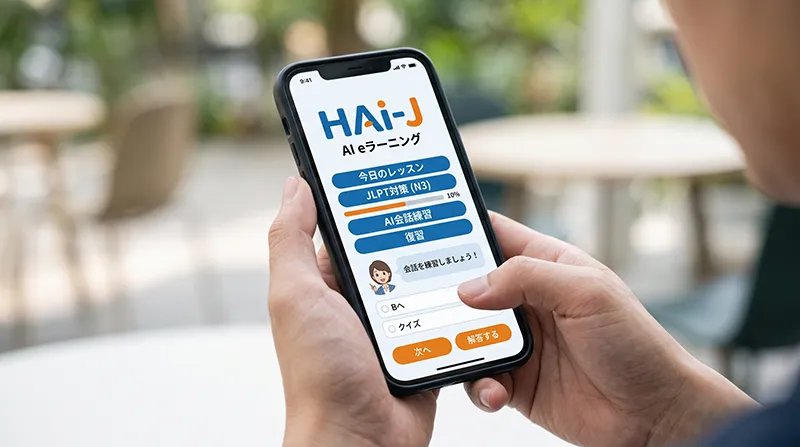
Pass rates and learning support achievements for the Japanese Language Proficiency Test (equivalent to A1/A2/B1, etc.)
e-learning specifically designed for exam success
JLPT / JFT
・Specific Skills No. 1/2
- National Qualification Examination for Certified Care Workers
-
Training/Other
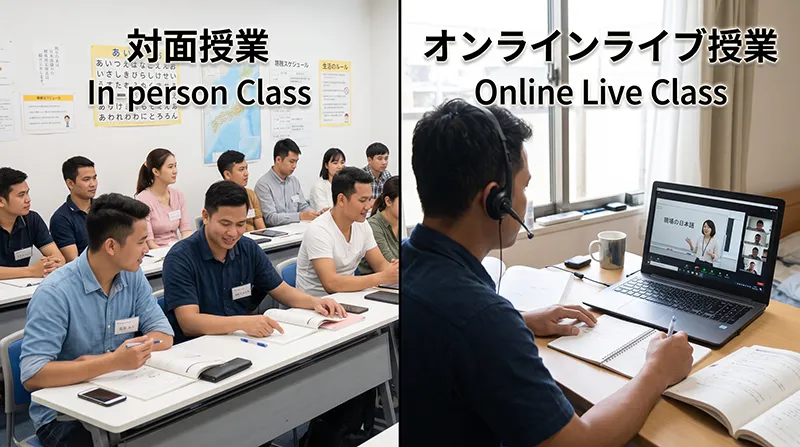
Providing opportunities to learn about Japanese culture
Training in Japanese culture
Training for Japanese people
• Training for highly skilled personnel
• Japanese Language Teacher Training Course / Instructor Introduction
cost
80,000 to 120,000 yen (tax included)
*In the case of 100 hoursThe cost will vary depending on various factors such as the number of people, whether or not business trips are involved, and the duration of the trip.
The training and employment program requires that classes be provided by "registered Japanese language teachers," which is a significant difference from the requirements for volunteer instructors.
We will provide you with the best possible solutions to minimize the burden on companies, management support organizations, and individuals resulting from the transition to this system.
Please feel free to contact us for a consultation.
We will make this a productive time for business discussions.

- When should I start preparing?
- Who should I talk to about this?
- What should I prepare? etc.
We have received many inquiries.
Please feel free to contact us for a consultation.